
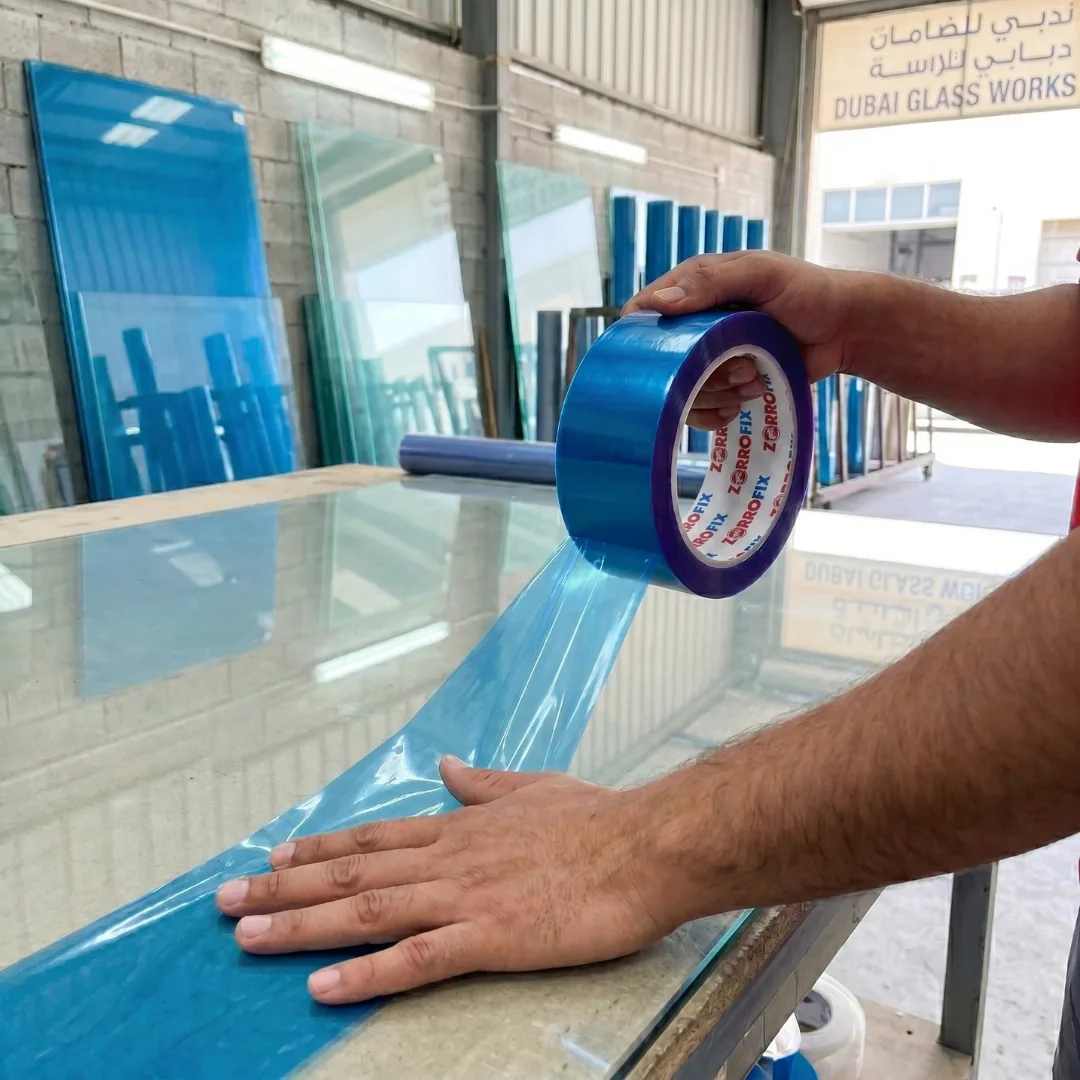
Surface protection tape is one of the most misunderstood products in the fabrication industry. Choose too light a film and your surface gets scratched. Choose too heavy an adhesive and you damage the very surface you're trying to protect. Here's how to get it right.
What Surface Protection Tape Actually Does
Surface protection films are temporary, they protect during fabrication, transit, installation, and construction, then peel off cleanly. They guard against scratches, dust, paint overspray, concrete splatter, and UV degradation. The film must stick firmly enough not to fall off, but leave zero residue when removed.
Choosing the Right Thickness
| Thickness | Best For |
|---|---|
| 50–80 micron | Light duty: glass, polished metal, PVC profiles |
| 100–150 micron | Medium: aluminium composite panels, stone, ceramics |
| 200+ micron | Heavy: steel sheets, rough handling, outdoor storage |
Adhesion Levels Explained
Low-tack films (150–300g/25mm) are ideal for delicate surfaces like powder-coated aluminium and polished marble. Medium-tack (300–600g/25mm) suits painted steel and glass. Avoid high-tack films on any surface you cannot clean, the adhesive can transfer, especially in hot climates.
Removal Best Practices
Always remove within the recommended dwell time, most films should be removed within 3–6 months of application. Remove at a 180° angle, slowly, in the direction of application. In cold weather, warm the film slightly with a heat gun to soften the adhesive. Never leave protective film on surfaces exposed to direct UAE sunlight for extended periods.
Need surface protection film for a specific substrate? Contact us with your surface type and project duration.
Get in Touch