
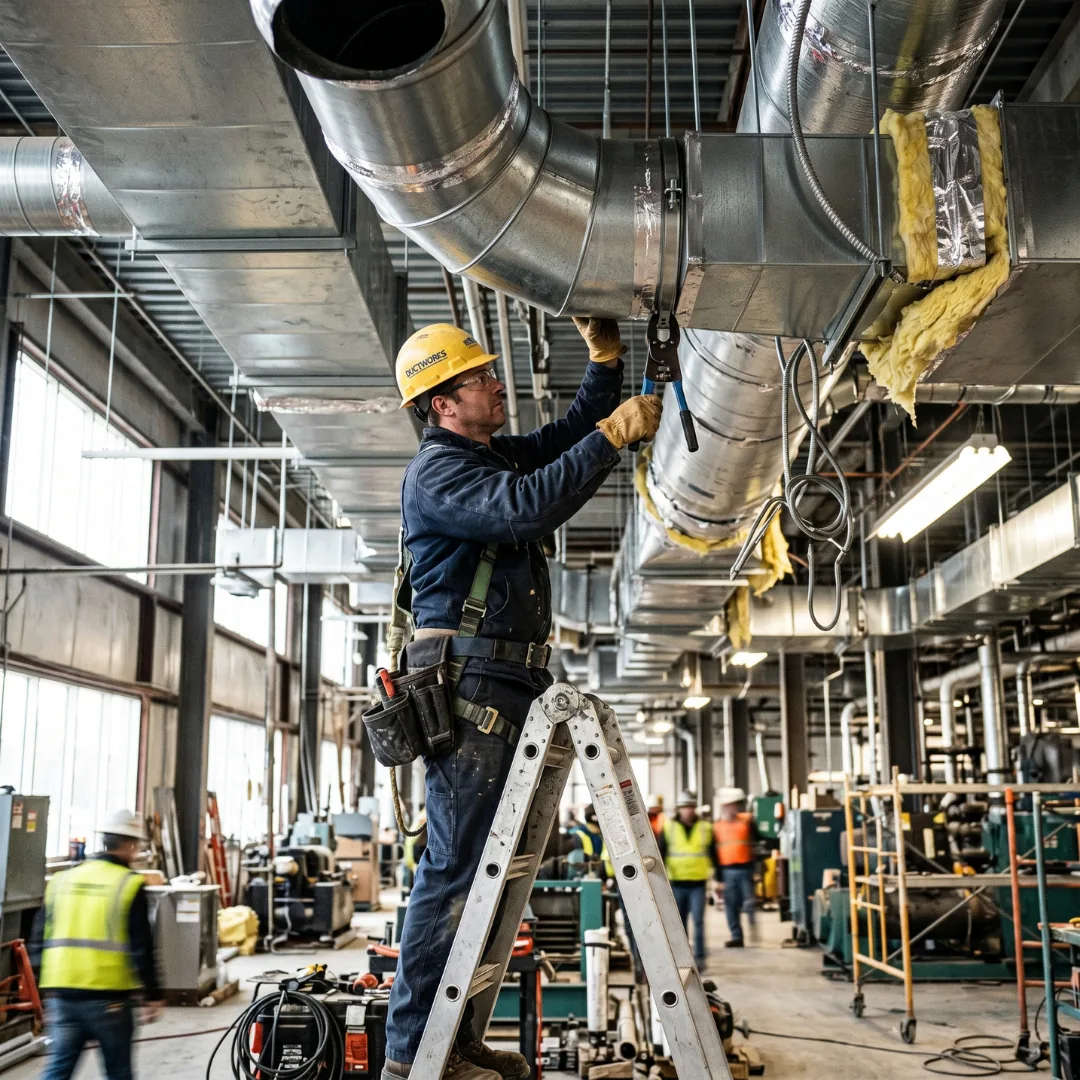
Leaky ductwork is one of the biggest hidden costs in building operations. Studies show that poorly sealed HVAC systems can lose up to 30% of conditioned air before it reaches the intended space, wasting energy, reducing comfort, and straining equipment. Aluminium foil tape is the professional solution.
Why Standard Duct Tape Fails
Ironically, the tape most people call 'duct tape' is not appropriate for HVAC ductwork. Cloth duct tape dries out, cracks, and loses adhesion under the repeated thermal cycling that ducts experience, especially in the UAE's extreme temperature swings. It fails silently, allowing air to leak for months before anyone notices.
How Aluminium Foil Tape Works
Aluminium foil tape uses a highly conformable aluminium backing with an aggressive acrylic adhesive. It creates a metal-to-metal bond at duct seams that expands and contracts with the metal without cracking. The foil surface also reflects radiant heat, improving the thermal efficiency of insulated ductwork.
Key Properties for HVAC Applications
| Property | Value |
|---|---|
| Temperature range | –40°C to +150°C |
| Moisture resistance | Excellent, vapour barrier rated |
| Adhesion | Acrylic, bonds to metal, foil, and most insulation |
| UL rating | UL 723 listed for duct sealing |
| Flame resistance | Self-extinguishing |
Application Best Practices
Clean the duct surface before application, dust, oil, and moisture reduce adhesion. Apply at temperatures above 10°C for best initial tack. Press firmly across the full width using a roller or squeegee. Overlap joints by at least 25mm for an airtight seal.
Sourcing aluminium foil tape for an HVAC project? Request a sample or bulk quote from our team.
Get in Touch