
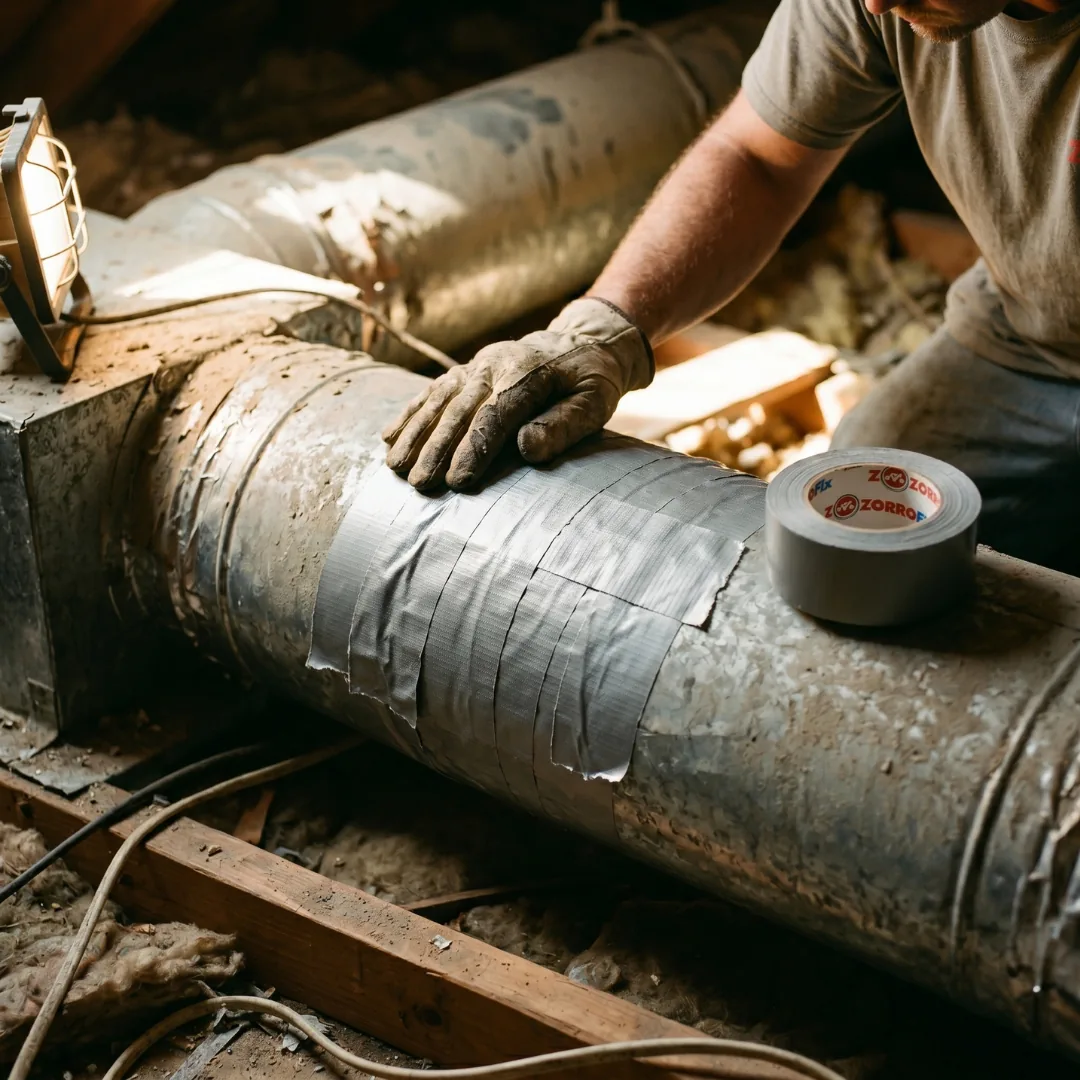
Duct tape is one of the most versatile, and most misused, tapes in the world. Its name alone misleads people into using it on actual ductwork, where it almost always fails. Let's separate the myths from reality.
Myth 1: Duct Tape is for HVAC Ducts
False. Standard cloth duct tape fails under the thermal cycling, humidity, and UV exposure typical of HVAC installations. For ductwork, always use UL-listed aluminium foil tape or mastic sealant. The name 'duct tape' dates back to WWII military use, not HVAC.
Myth 2: Duct Tape Leaves No Residue
On surfaces exposed to heat or UV, or when left for months, duct tape adhesive transfers. Always use it as a temporary solution or on surfaces where residue is acceptable.
Myth 3: All Duct Tapes are the Same
Professional-grade duct tape (with a thick cloth backing and rubber adhesive) differs significantly from budget versions in tensile strength, adhesion, and durability. AIPL's duct tape is rated for construction and industrial repair.
What Duct Tape is Actually Good For
| Application | Why it Works |
|---|---|
| Cable management | Strong, wraps easily, removes cleanly short-term |
| Construction repairs | High tensile strength for temporary fixes |
| Upholstery / fabric repair | Conforms to irregular surfaces |
| Bundling and securing | Strong hold, easy to tear by hand |
| Protective wrapping | Tough backing resists abrasion |
Looking for the right tape for a specific repair or construction application? Ask our team.
Get in Touch